Blog · Lighting
The best time of day for an elevation render: a lighting guide for architects
Light changes a facade more than any material choice. Here is how each time of day reads on a real elevation — and which one to put in front of your client first.
Most designers pick a render's light by habit — usually golden hour. But the light you choose decides what your client notices: warm timber or cool stone, the shape of the balconies or the glow of the lighting design. Because Visulixx can re-light a finished render without moving anything else, we rendered one G+2 house in sixteen lights. Here is what we learned.
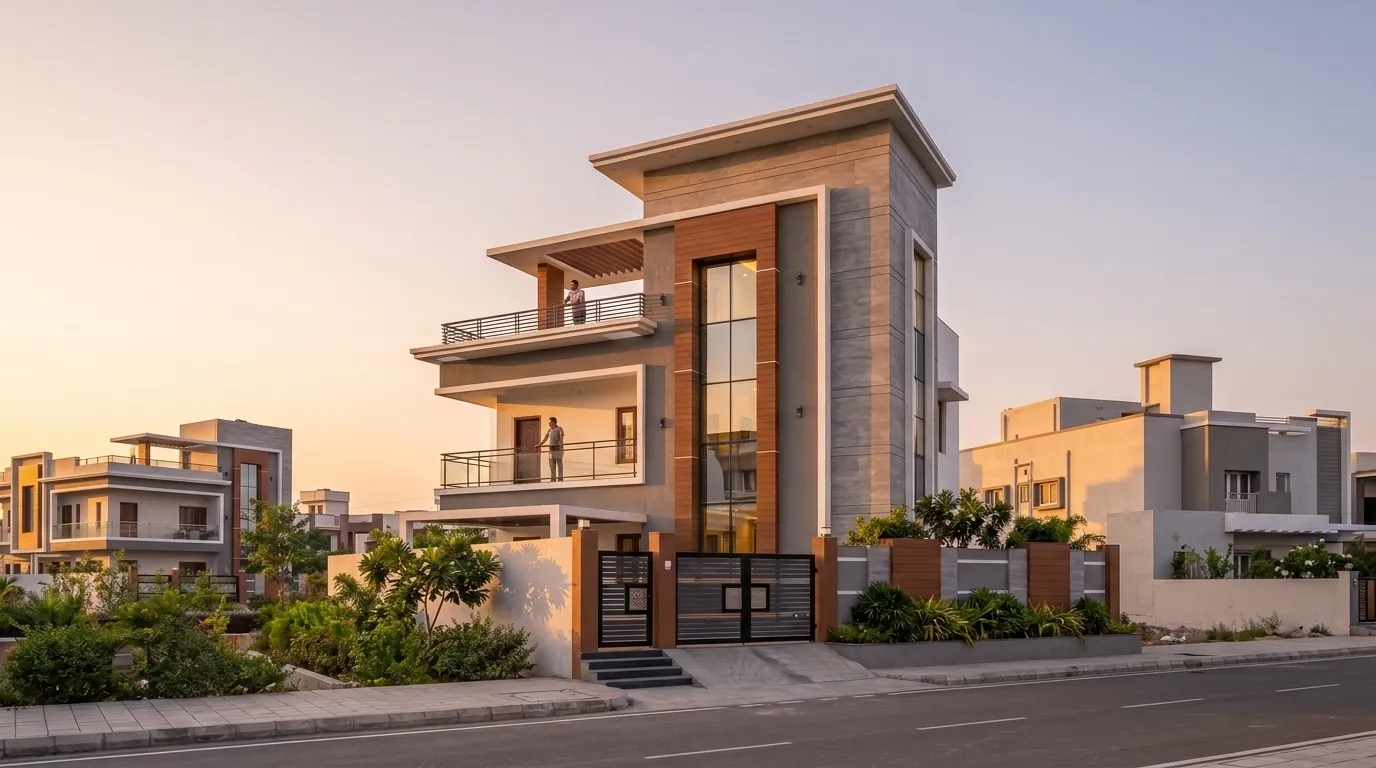
Golden hour — the default for a reason
Low, warm sun rakes across the facade, so every projection casts a long shadow and every material looks rich. Timber turns honey-coloured, stone shows texture, and glass picks up a warm sky. Use it for: the first image in a presentation, brochure covers, and any design that leans on warm materials.
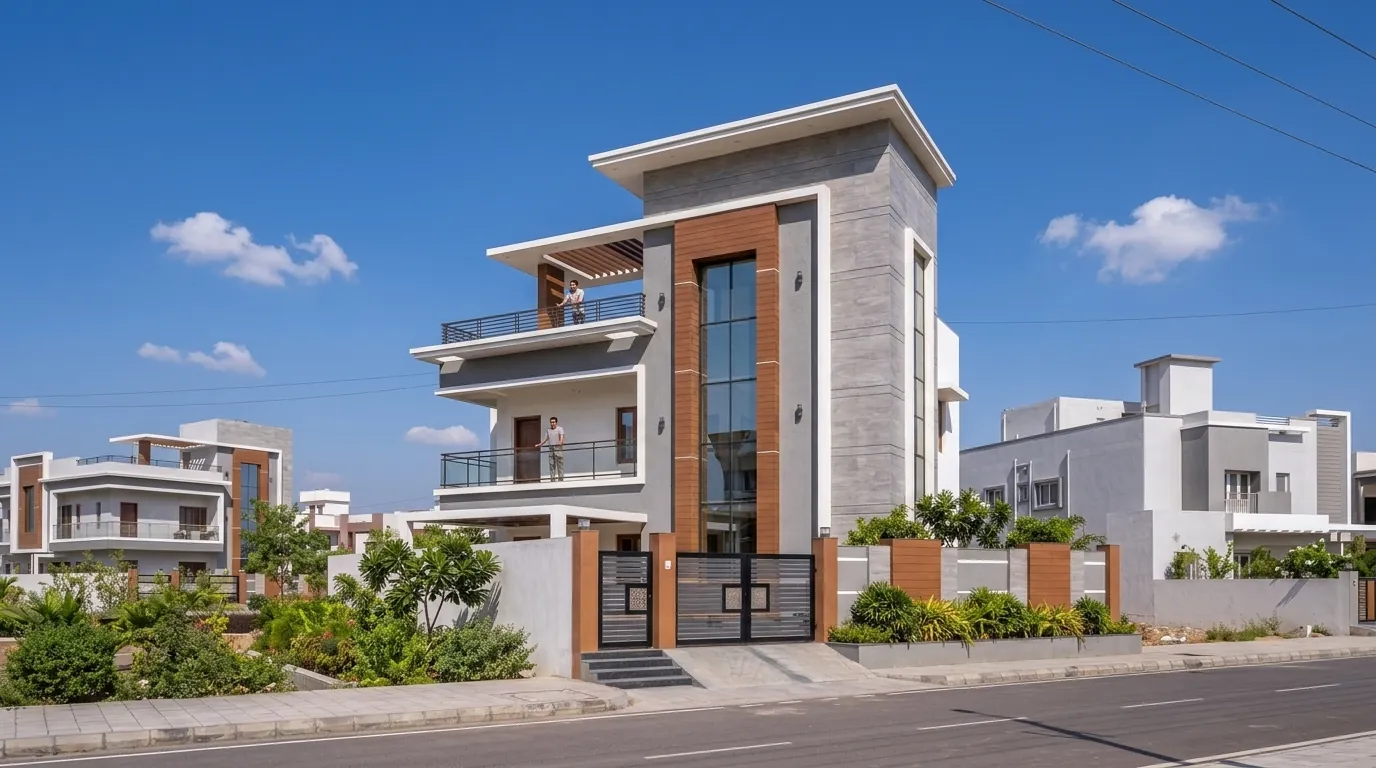
Midday — honest colours
High sun, short shadows, true colour. It is less romantic, but it is the light a client will actually see most days. Use it for: choosing paint, cladding and stone; approval sets; anything where colour accuracy matters more than mood.
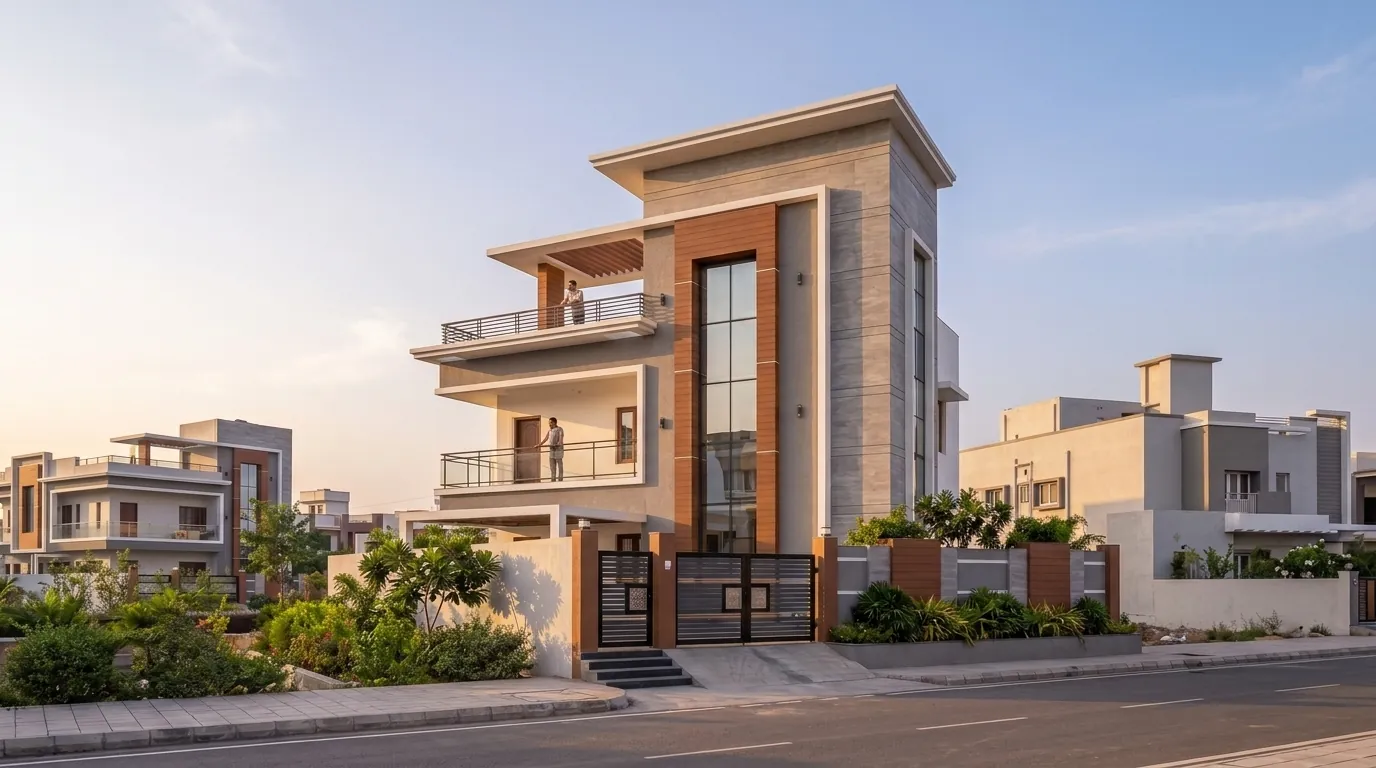
First light and dawn mist — soft and calm
Morning light is low but cooler than evening, and mist softens the background so the building stands out. Use it for: green plots, villas and anything where landscape is part of the sell.
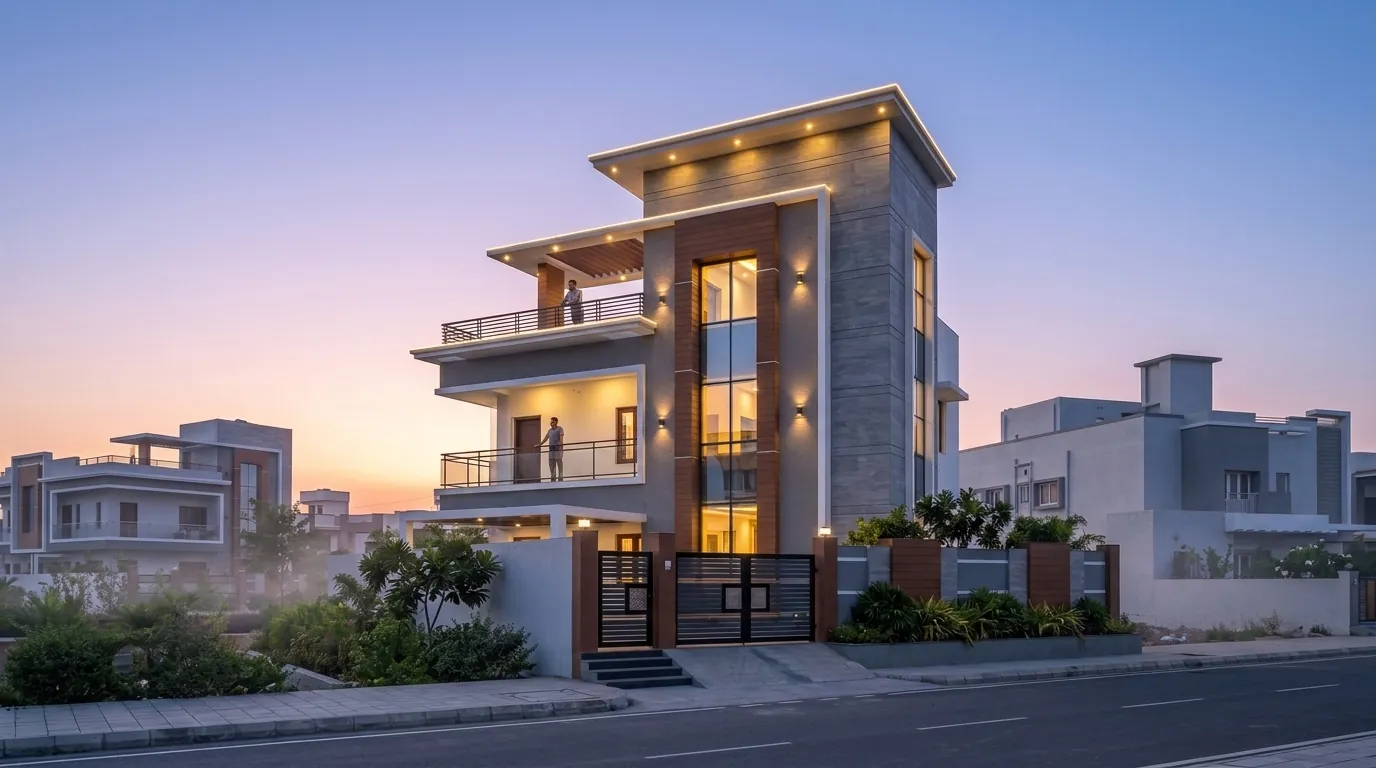
Dusk, blue hour and night — show the lighting design
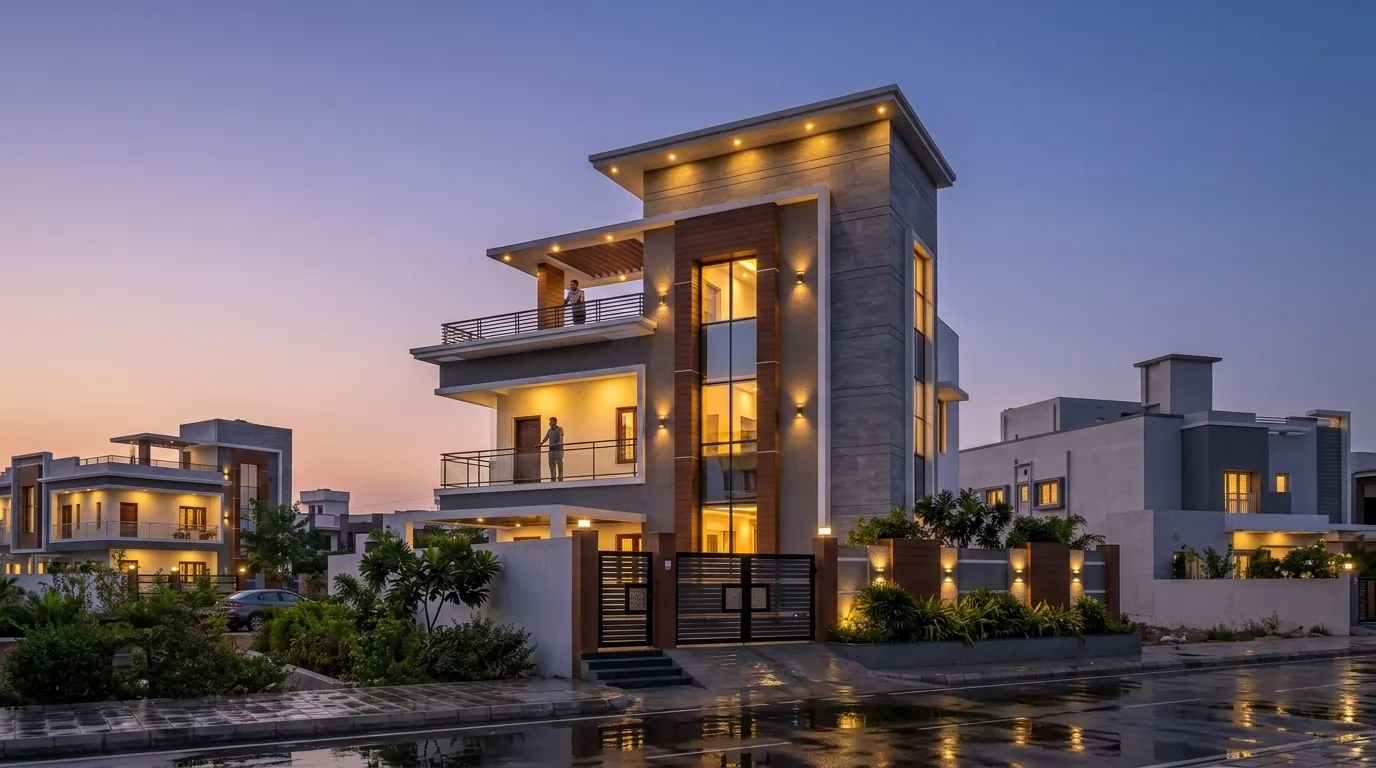
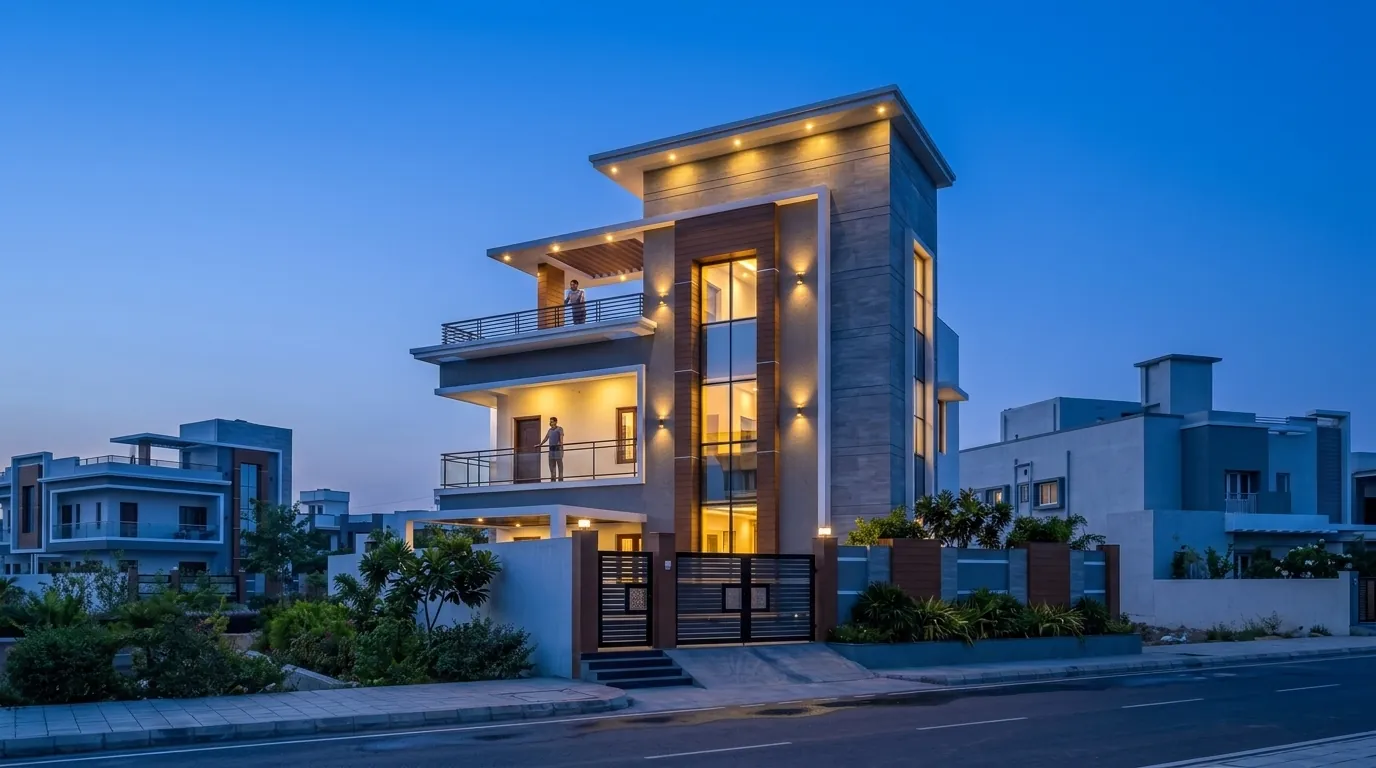
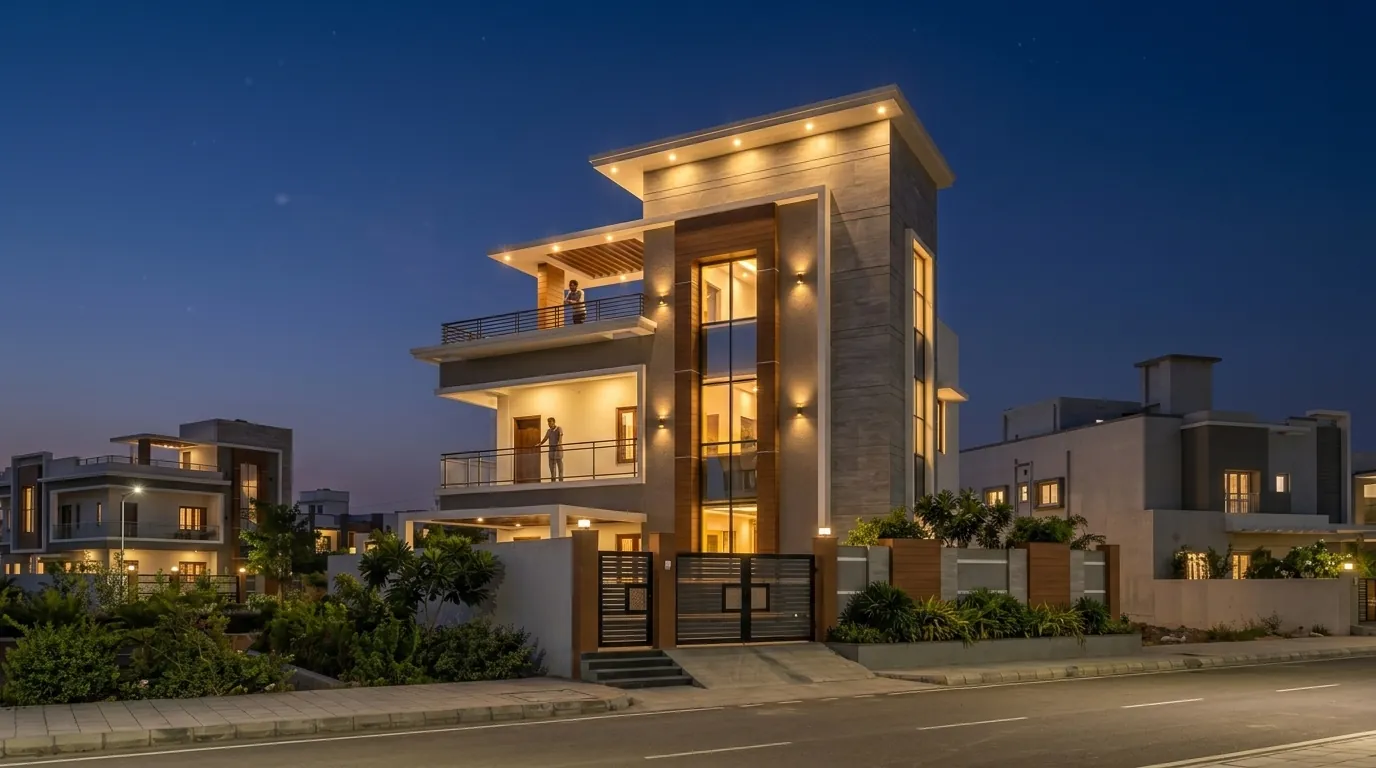
Once the sun is down, the building's own lights take over: window glow, cove lights, gate lamps and garden bollards. A blue-hour sky makes warm interiors glow. Use it for: showing the lighting design, premium projects, and the "wow" slide near the end of a presentation.
Overcast and monsoon — underrated
Flat overcast light shows form without harsh shadows, and monsoon scenes — wet surfaces, rain, reflections — are memorable and very local. Use them for: social media, and reassuring clients about how materials look when wet. (See monsoon versions in the G+2 house gallery.)
A simple rule for presentations
- Open with golden hour — it sells the design.
- Follow with midday — it answers the colour questions.
- Close with blue hour or night — it shows the lighting and leaves an impression.
With Change atmosphere this is one render and two re-lights, and the building, street and cars stay identical in all three — so the client compares light, not three different pictures. See all sixteen in the G+2 house gallery.
FAQ
Common questions
What is the best time of day for an architectural render?
Golden hour is the most flattering and a safe first image; midday shows true colours; blue hour and night show the lighting design. Most presentations benefit from two or three.
Can I change the time of day of a finished render?
In Visulixx, yes — Change atmosphere re-lights a finished render and keeps the building, street, trees and cars exactly as they were.
3 free renders · no card
Render your own elevation in about a minute.
Three free renders, no card. Upload a SketchUp, Revit or AutoCAD view and see it photoreal — checked against your drawing.