Guide · Sun path & shadow analysis
Sun path and shadow analysis, for your plot, not a textbook.
Pick the site and the date. Visulixx calculates the sun for that exact place and time, casts every shadow from your model and the neighbours, and makes an hourly shadow sheet in one click.
3 free rendersNo cardGoogle sign-in
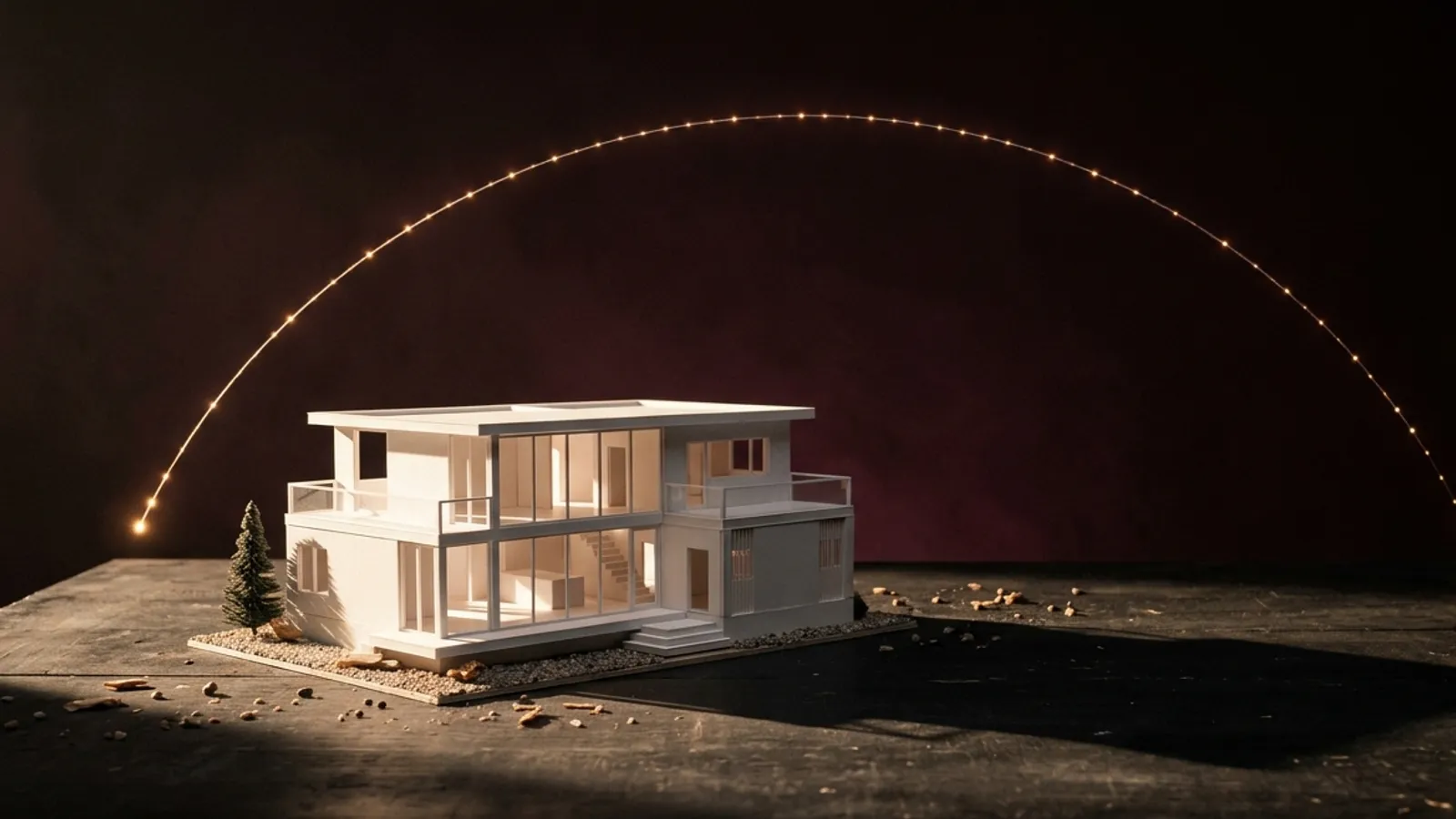
Why the sun matters more in India than the brochure admits
Across most of India the sun is high and hard for much of the year, and the west face takes the worst of the afternoon. Where it sits depends on your latitude: below about 23° N — Hyderabad, Chennai, Bengaluru, Mumbai — the June sun passes north of the building at noon, so a south window can get no direct sun at all in midsummer while a north window does. Rules of thumb get this wrong; a calculation for your coordinates doesn't.
How to run a sun and shadow study
- Set the site. In the 3D Studio: Site → Site & true sun → pick a city or type the plot's latitude and longitude, and set true north.
- Add the neighbours (optional). Site → Neighbours & roads → Show neighbours and roads. Footprints come from OpenStreetMap; estimated heights are labelled.
- Make the sheet. Check → Sun & shadow study → Make hourly shadow sheet: 8:00 to 17:00, each frame labelled.
Run a sun study on your model — free to try, no card.
Start free — 3 renders →Daylight and glare on every window
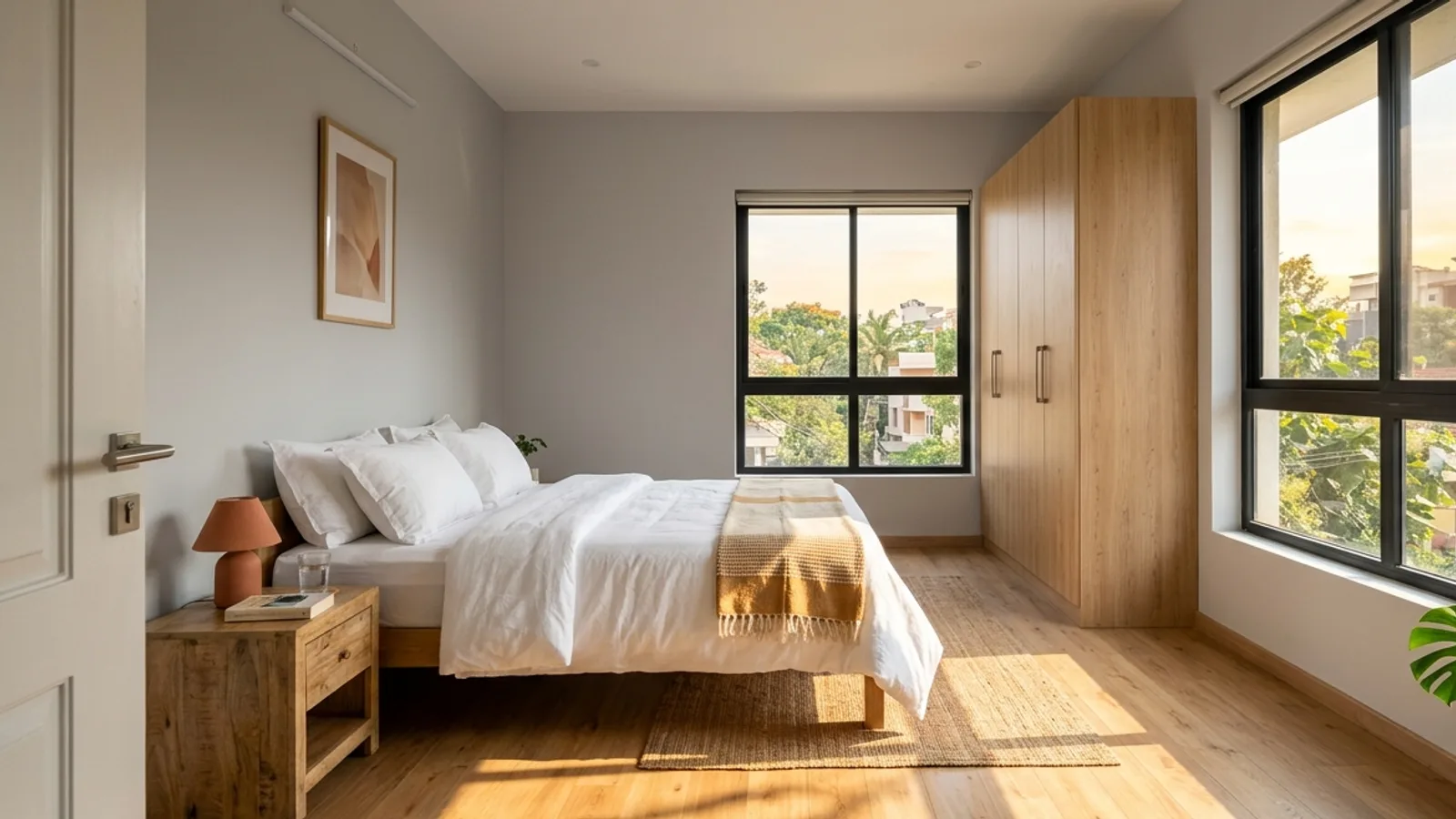
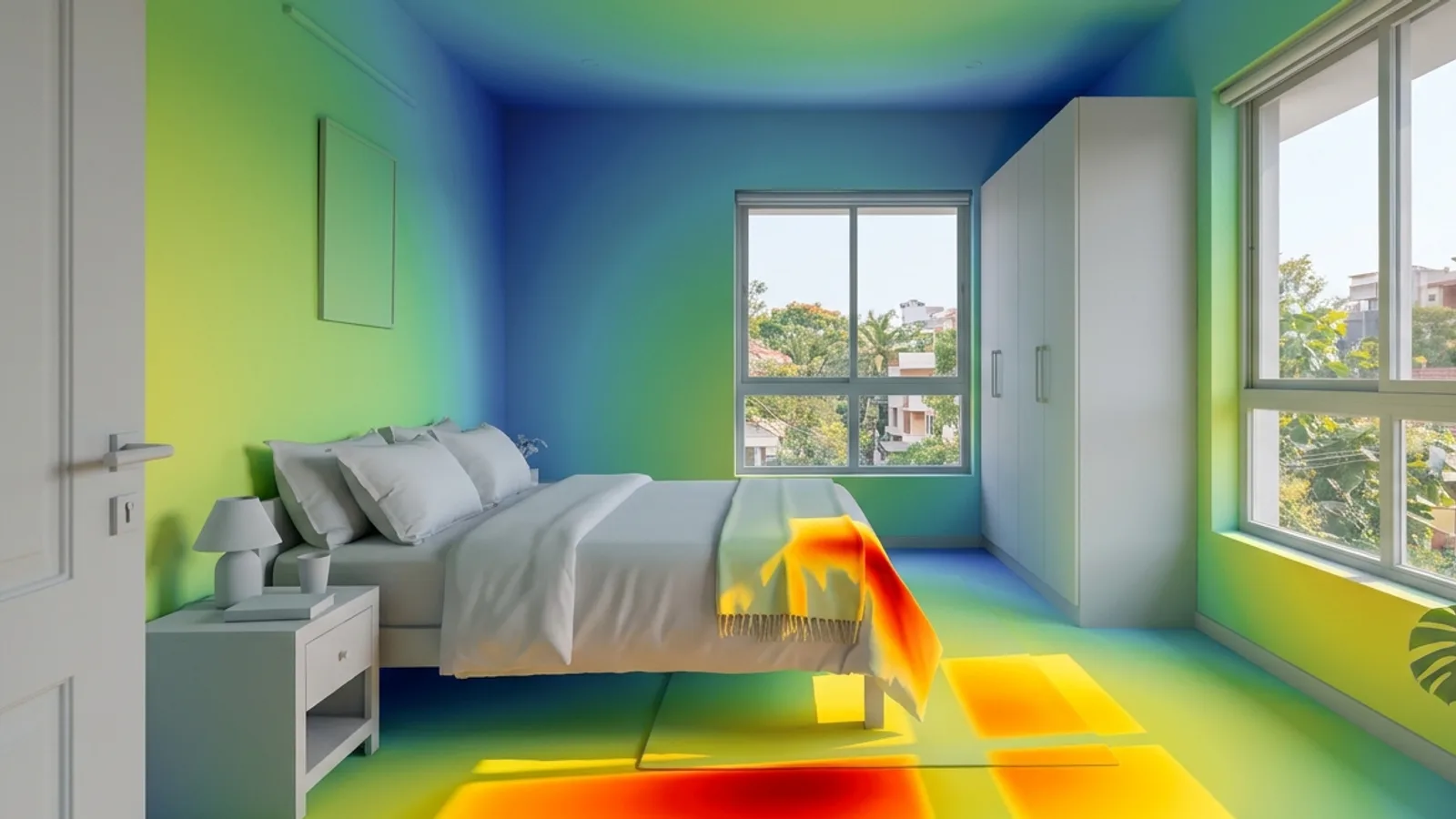
The daylight and glare check goes window by window: facing, area and hours of direct sun on 21 March, 21 June and 21 December, traced past your own walls, chajjas and the neighbours. Windows hit by low sun straight into the glass are flagged so you can shade them — then add shading and run it again.
The same sun in your renders
Shadows in a presentation should be the shadows on site. The sun you set for the study is the sun used by AI renders and 360° views made from the 3D Studio, so the golden-hour render shows the shadow your client will actually see at that hour.
What the study is — and isn't
Sun position, shadow direction and shadow length are calculated physically for your coordinates, date and hour. Neighbours come from map data, which is good for context and approvals conversations; for a regulatory solar-access submission, confirm neighbour heights on site.
FAQ
Common questions
How accurate is the sun position?
It is calculated for your coordinates, date and hour, so shadow direction and length are physically correct for your model.
Why does my south window get no sun in June?
Below about 23° N the June sun passes north of the building at noon. The study shows what really happens at your latitude.
Where do neighbouring buildings come from?
OpenStreetMap. Heights are used where recorded and estimated otherwise, and estimated heights are labelled.
Do I need special software?
No. It runs in the browser in the Visulixx 3D Studio, open on every account.
3 free renders · no card